HPV Vaccination Decision Tool
Click the image below to use the decision tool.
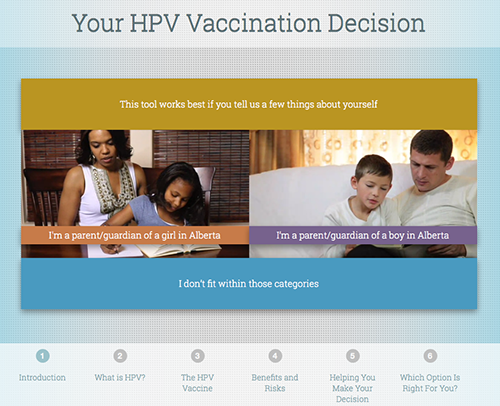
The HPV Vaccination Decision Tool is now available for parents, young men and young women. Click here to determine if vaccination is right for you.
HPV – human papilloma virus – is a common virus that affects most men and women. While many types of HPV are harmless, there is a direct correlation between certain types and cancer. About 45 types of HPV can be spread through skin-to-skin contact in the genital area. Of those 45, 15 are considered high-risk and can cause abnormal cells to develop into cancer. Feel free to use this tool to help determine if the HPV vaccination is right for you or your children.
For more information about HPV and the HPV Vaccine, explore these helpful resources.
- Find a Clinic
- Learn More About HPV
- Address a Fear of Needles
- Visit Immunize Alberta
- Answer your Questions
What’s the Link to Cancer?
HPV, or human papillomavirus, is a very common virus that affects most women and men at some point in their lifetime. About 100 types of HPV can affect different parts of the body. Most are harmless and go away on their own. However, there are about 45 types of HPV that can be spread easily by skin-to-skin contact in the genital area. About 15 of these are considered high-risk and can cause abnormal cells that can lead to cancer. In fact, high risk HPV causes:
-
Almost all cases of cervical cancer.
-
About 90 out of every 100 cases of cancer of the anus.
-
About 50 out of every 100 cases of cancer of the penis.
-
About 40 out of every 100 cases of cancer of the vulva and vagina.
-
About 60 out of every 100 cases of cancer of the oropharynx (in the throat, at the back of the mouth).
How Does HPV Cause Cancer?
You may be wondering how a common virus can lead to something as serious as cancer. Here’s how:
-
HPV is spread easily by even a brief moment of skin-to-skin contact in the genital area. In other words, you don’t have to have intercourse to get HPV – you can get it through oral sex or simply touching.
-
More than 70 out of every 100 people who have ever been sexually active will get HPV in their lifetime. The risk of getting HPV is highest soon after becoming sexually active.
-
Because high-risk HPV doesn’t cause symptoms, most people don’t even know they have it – or that they are passing it on to their partner. The virus can actually hide in your body for years without any sign of it.
-
For most people, the body fights the HPV infection and clears the virus on its own without doing any harm.
-
But the 15 or so high-risk types of HPV can cause changes in cells that can lead to cancer.
How Can I Prevent HPV?
Condoms lower the risk of HPV. Keep in mind that the virus may be on skin that isn’t covered by a condom, so HPV can still be passed on even if condoms are used.
The HPV vaccine Gardasil® protects against HPV types 16 and 18, two of the most common and harmful types of high-risk HPV. HPV 16 and 18 cause:
-
About 83 out of every 100 cases of cancer of the anus.
-
About 70 out of every 100 cases of cancer of the cervix.
-
About 30 out of every 100 cases of cancer of the vagina, vulva, penis, and oropharynx.
The vaccine works best when given before sexual activity begins, before any exposure to HPV. But people may benefit from the HPV vaccine even if they have been sexually active. This is because the vaccine may offer protection from the types of HPV they haven’t been exposed to yet.
The Alberta school-based immunization program offers the vaccine free of charge to all girls in Grade 5. Starting September 2014, the school-based immunization program will include boys in Grade 5 with a four-year catch-up program for Grade 9 boys.
-
Like all Alberta school-based immunization programs, the HPV immunization program is voluntary. A parent or guardian needs to provide consent before the HPV vaccine is given.
-
Public health nurses give three doses of HPV vaccine in the arm over six months.
People who are no longer in school and are interested in the vaccine should speak with their healthcare provider. If not eligible for the school-based program, the cost for the three shots is about $525. Private health insurance may pay for part of this.
What Else Does the HPV Vaccine Protect Against?
The HPV vaccine Gardasil® protects against the two types of HPV that cause about 90 out of every 100 cases of genital warts.
Tips to Reduce Your Risk of getting HPV and the Cancers it Causes
Helpful tips from Alberta Health Services’ Cancer Screening Programs:
-
Talk to your healthcare provider about the HPV vaccine and whether it’s right for you.
-
Limit the number of sexual partners you have because any skin-to-skin contact in the genital area increases your exposure to HPV. Knowing your partner’s sexual history is also important.
-
Make the decision to use condoms, which can reduce your chance of getting HPV. But condoms do not always protect against HPV because they do not cover the entire genital area.
-
Don’t smoke, and limit second-hand smoke exposure. Tobacco exposure in people with HPV increases the risk of cancer.
-
If you are a woman and have ever been sexually active, you should get a Pap test regularly. Pap tests are the best way to find abnormal cells on the cervix caused by HPV that don’t go away on their own. These cells can be followed closely if found early. The cells can be treated, if needed, so that cervical cancer does not develop.
-
Women should start having Pap tests at age 21 or 3 years after becoming sexually active, whichever is later.
-
Even if you have had the HPV vaccine, get a Pap test regularly. The HPV vaccine does not protect against all the types of HPV that cause cervical cancer.